
Slime School
Butter slime kits for kids: what goes in them and what to buy instead
Butter slime kits for kids all contain roughly the same four things. Here is what each one does, how the recipe turns from glue into butter, and the honest case for skipping the mixing step entirely.
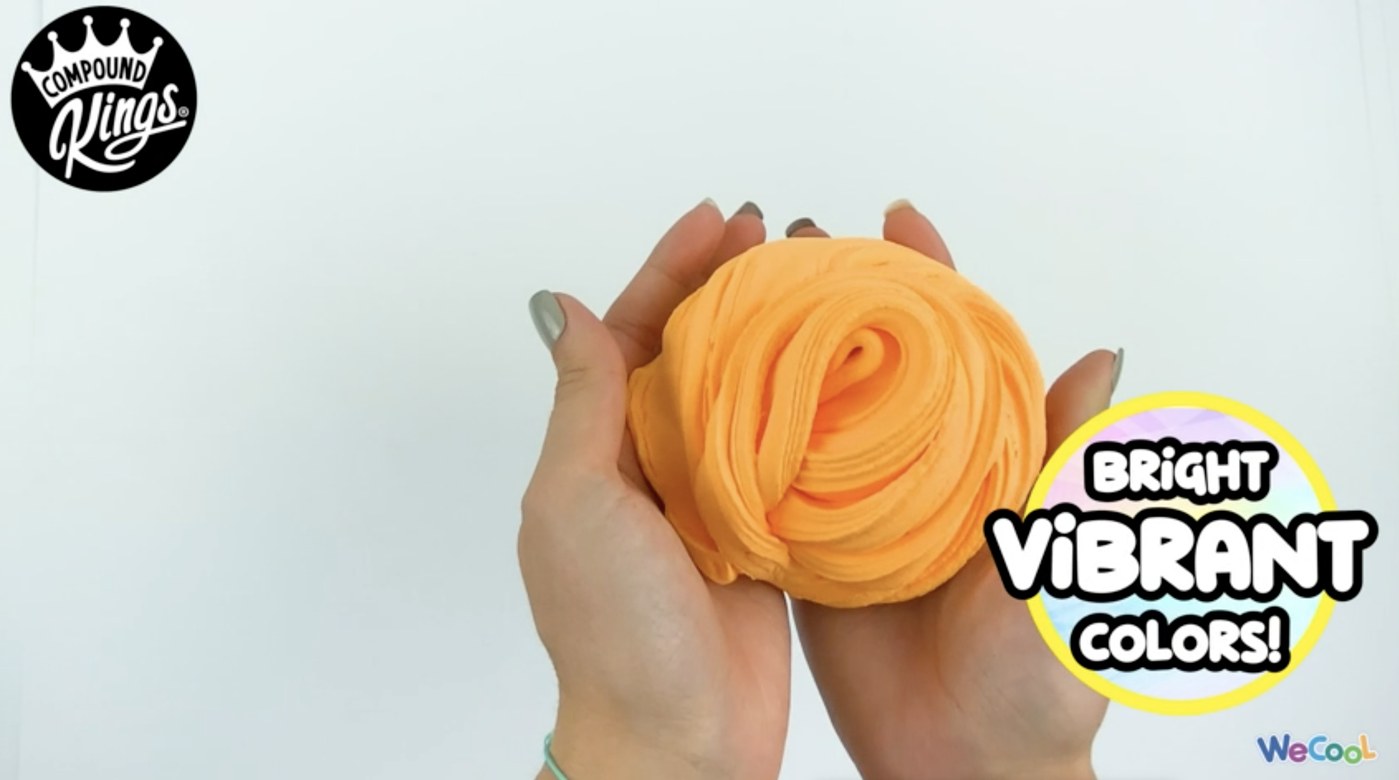
Ingredients needed to make butter slime
Every butter slime kit sold for kids is a repackaging of four ingredients, and knowing them makes it much easier to judge whether a kit is worth its price. The base is white school glue — Elmer's glue is the one the recipes are written around, because its PVA ratio is consistent from bottle to bottle. The activator is contact lens solution, which has to contain boric acid and sodium borate; a saline solution without those will not work. A pinch of baking soda firms the mixture before the contact lens solution goes in. The fourth ingredient is the one that makes it butter rather than ordinary slime: soft foam clay, usually Elmer's Model Magic.
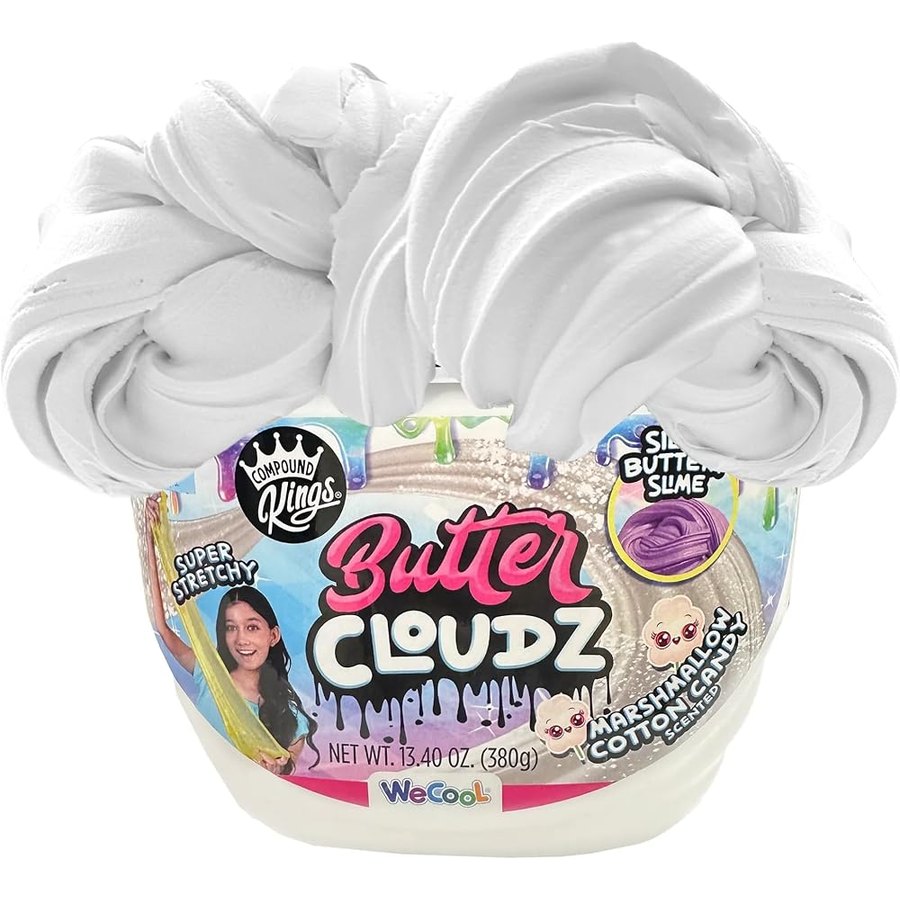
The Model Magic is also the reason butter slime behaves the way it does. Foam clay is full of tiny beads that break the stretch of the glue matrix, so the mixture spreads under a palm instead of snapping back. It is also why butter slime is less stretchy than fluffy slime, and why a little lotion is a common addition — please add it a few drops at a time, because too much turns the batch greasy and it will not come back.
- White school glue, about 120 ml — Elmer's glue is the reliable base
- Contact lens solution containing boric acid and sodium borate
- A quarter teaspoon of baking soda
- A packet of soft foam clay, such as Elmer's Model Magic
- Optional: a few drops of food coloring, or coloured clay instead
- Optional: a teaspoon of lotion for extra stretch
How the recipe turns
Pour the glue into a bowl and stir the baking soda through it until the mixture looks slightly cloudy. If you are using food coloring rather than coloured clay, add it now — colouring the glue rather than the finished slime is what keeps hands from staining. Then add the contact lens solution a teaspoon at a time, stirring between each one. The moment the mixture pulls away from the sides of the bowl in one lump, stop.
Knead that lump until it stops sticking to your fingers. This is the point where most first attempts go wrong: the batch feels sticky and the instinct is to add more solution, which makes it rubbery and tears. Kneading alone fixes stickiness in about two minutes. Only once it is smooth do you work the foam clay in, a third at a time, folding rather than stretching. The texture turns from glossy to matte as the clay goes through, and that change is how you know the experiment worked.
- Stir baking soda into the glue until it clouds
- Add food coloring to the glue, not to the finished slime
- Add contact lens solution a teaspoon at a time
- Stop the second it leaves the sides of the bowl
- Knead for two minutes before judging the texture
- Fold the clay in a third at a time until the shine goes
Is a kit worth buying?
A kit's value is convenience, not economy. Buying the glue, the clay and the solution separately costs less per batch and leaves you with extra of each, and the supermarket versions of all three are easy to find. What a kit buys is the guarantee that the four things in the box work together, which matters when the alternative is discovering mid-afternoon that the solution you own is the wrong kind.
What no kit solves is the variance. The same recipe, the same brands and the same child produce a different batch on a humid day than a dry one, and a batch that was perfect on Saturday is stiff by Wednesday. If the point of the afternoon is the chemistry, that is fine and the inconsistency is half the fun. If the point is for a child to have good slime, it is a tax.
- A kit guarantees the parts work together
- Buying ingredients loose is cheaper per batch
- Neither fixes the day-to-day variance of the recipe
- Neither fixes a batch going stiff after a few days
The alternative: a tub that is already made
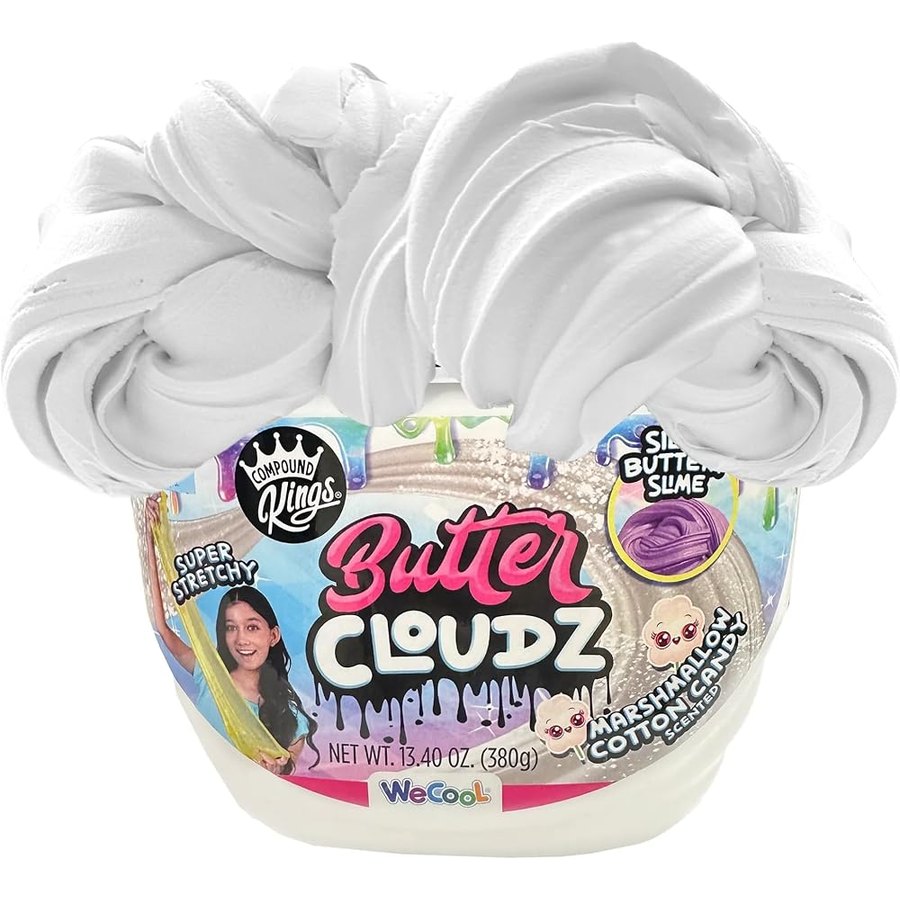
This is the part where we are not neutral. We make pre-made butter compound, and we make it because the kit route produces a good afternoon and an unreliable toy. Our tubs arrive mixed, scented and rested, which means the stretch is settled before the lid goes on and does not keep changing while a child plays.
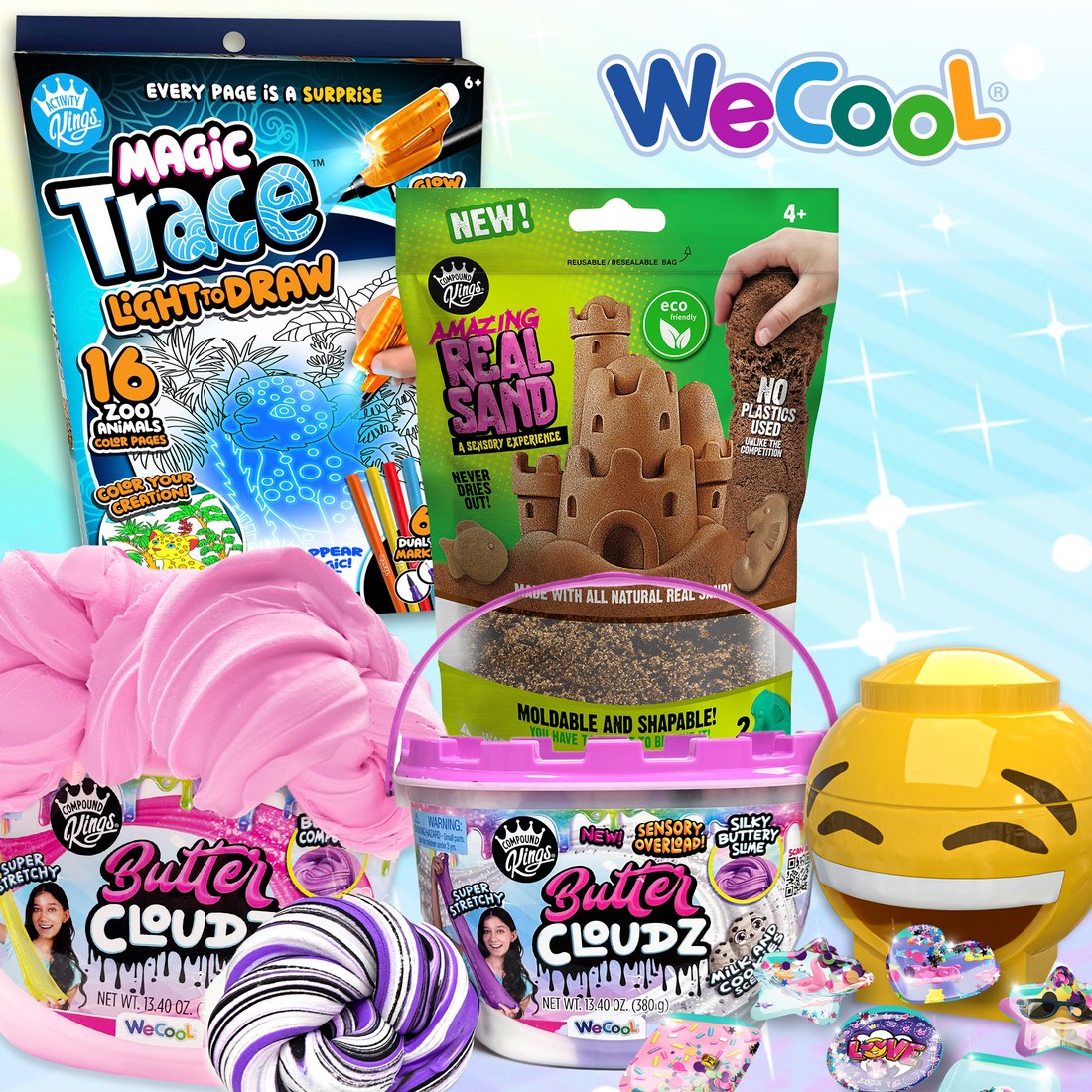
The practical difference shows up in the second week. A home batch is at its best for a day or two and then needs reviving; a sealed tub is the same in month three as it was on the first opening, as long as the lid went back down. For a party or a classroom, where the alternative is mixing thirty batches, it stops being a preference and becomes the only workable answer.
- No glue, no clay, no measuring and no bowl in the sink
- The same texture on the first opening and the fiftieth
- Scented per tub rather than coloured and unscented
- Sealed mini tubs for classrooms and party bags
Keeping butter slime alive
Whether it came from a bowl or a tub, butter slime dies the same way: air. The surface dries first and goes crusty, then the crust gets folded into the soft middle and the whole batch turns grainy. An airtight container and a lid that actually seals will do more for the life of a batch than any additive.
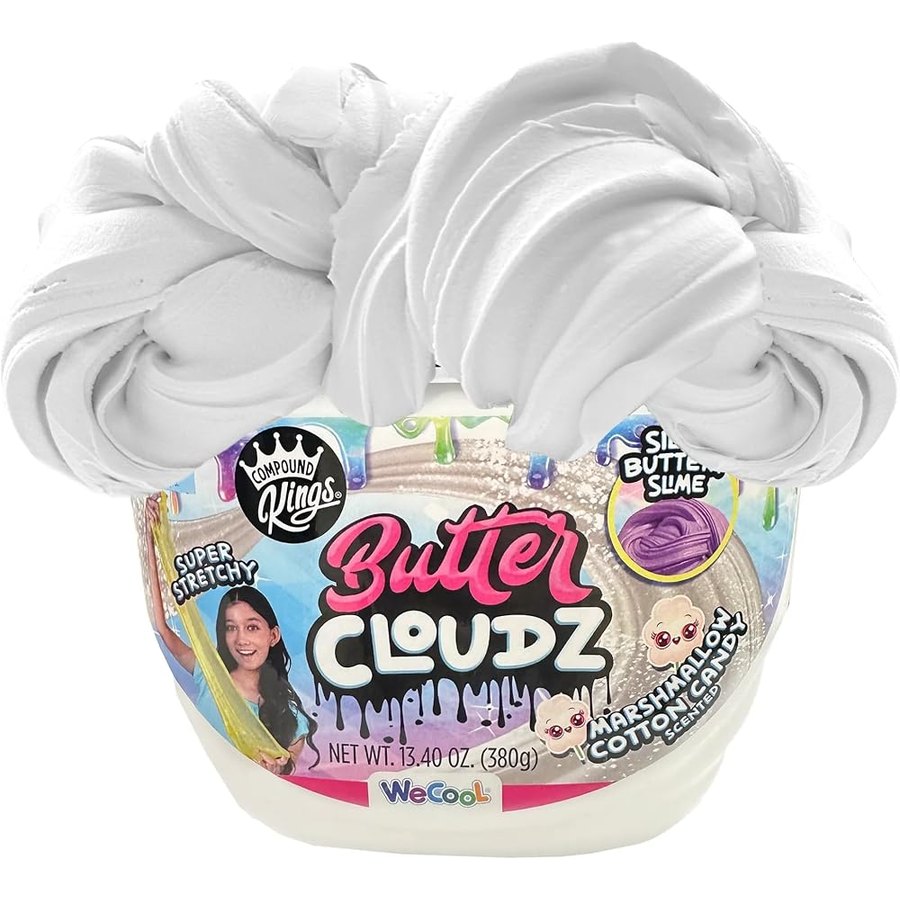
Heat is the second enemy. A tub on a sunny windowsill loses moisture far faster than one in a cupboard, and a radiator will stiffen a batch in a single evening. Keep it cool, keep it shut, and keep it off carpet — the pigment in a coloured batch takes hold of fabric in a way that no amount of scrubbing undoes.
- Seal it in an airtight container after every session
- Keep it out of sun and away from radiators
- Fold a dry rim back into the middle before it crusts further
- Keep it off carpet, upholstery and painted wood
Common questions about butter slime for kids
Most of what goes wrong with a batch has one of three causes: too much activator, not enough kneading, or the wrong kind of clay. The questions below are the ones we are asked most often, and the answers are the short version of everything above.
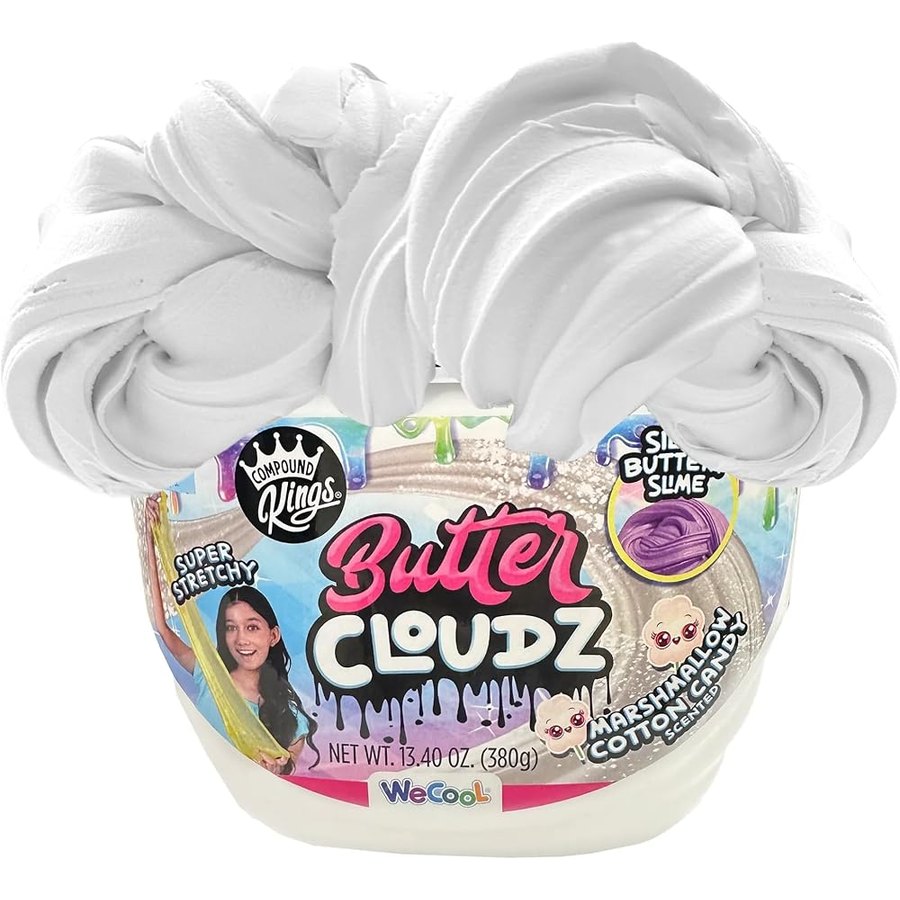
- Too much solution makes it rubbery — knead first, add later
- Air-dry clay is not a substitute for foam clay
- Saline without boric acid will not activate glue
- Humidity changes the result more than people expect
More from Slime School
Short answers
What are the best slime containers?
Anything that truly seals. A screw-down tub beats a click-shut box, and both beat a zip bag, which lets air in along the seam. Glass jars work but break; our tubs are the compromise.
Can you use a different clay?
Only another soft foam clay. Air-dry clay and polymer clay both turn a batch grainy and then hard, because neither has the tiny beads that give butter slime its spread.
How long does butter slime last?
A home batch is at its best for a few days and workable for a couple of weeks. A sealed pre-made tub holds for months while the lid stays down.
Will this recipe work with any glue?
It needs PVA school glue. Clear glue makes a different, glassier slime, and craft or wood glues will not activate at all.
Is butter slime suitable for younger kids?
From about four, with an adult nearby. The ingredients are not meant to be eaten and the mixing stage needs supervision; a ready-made tub removes that stage entirely.
Compound Kings slime tubs that skip the mixing step
10 pre-made tubs
-
FLAGSHIP
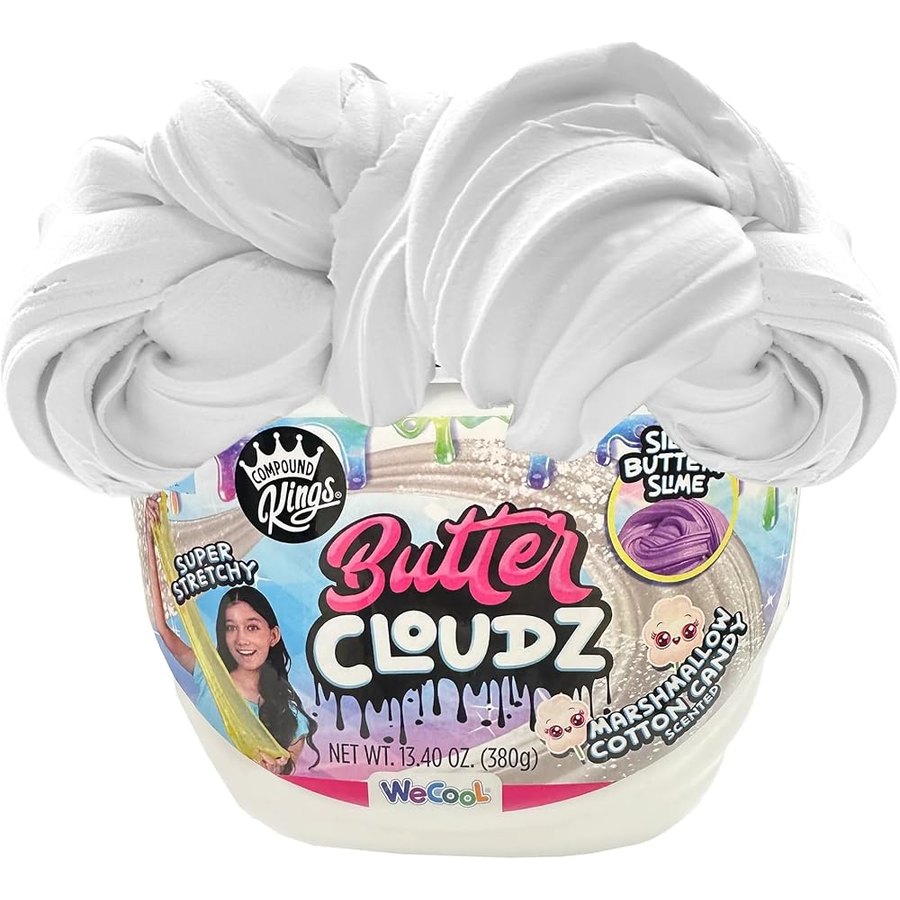
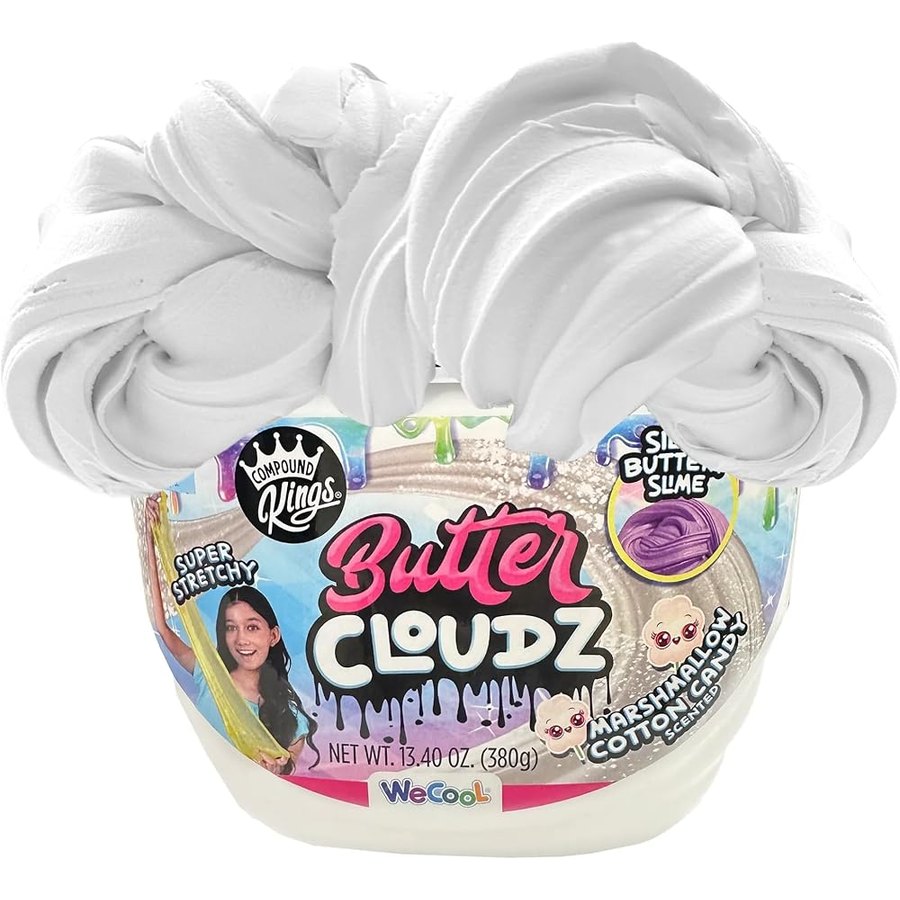 Fluffy Butter Cloudz Compound Bucket
$14.99
- Cloud butter · Red cherry
- 3 lb bucket
-
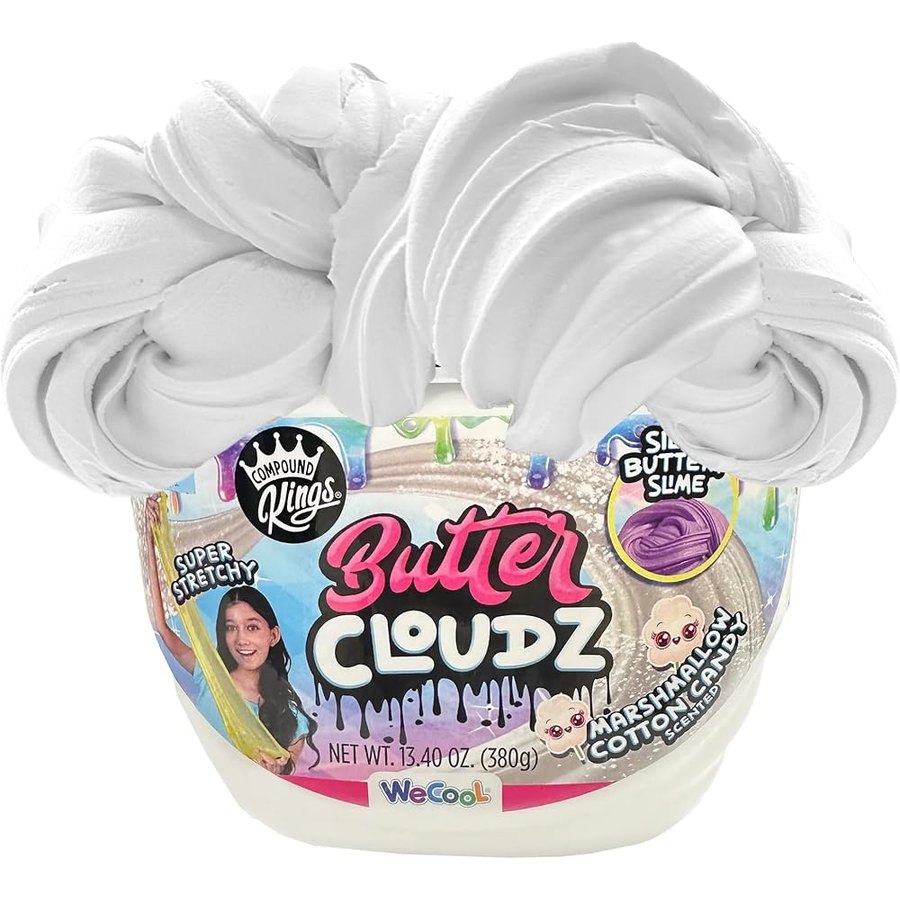 Butter Cloudz Blue Raspberry Tub
$14.99
- Butter · Blue raspberry
- Single tub
-
NEW
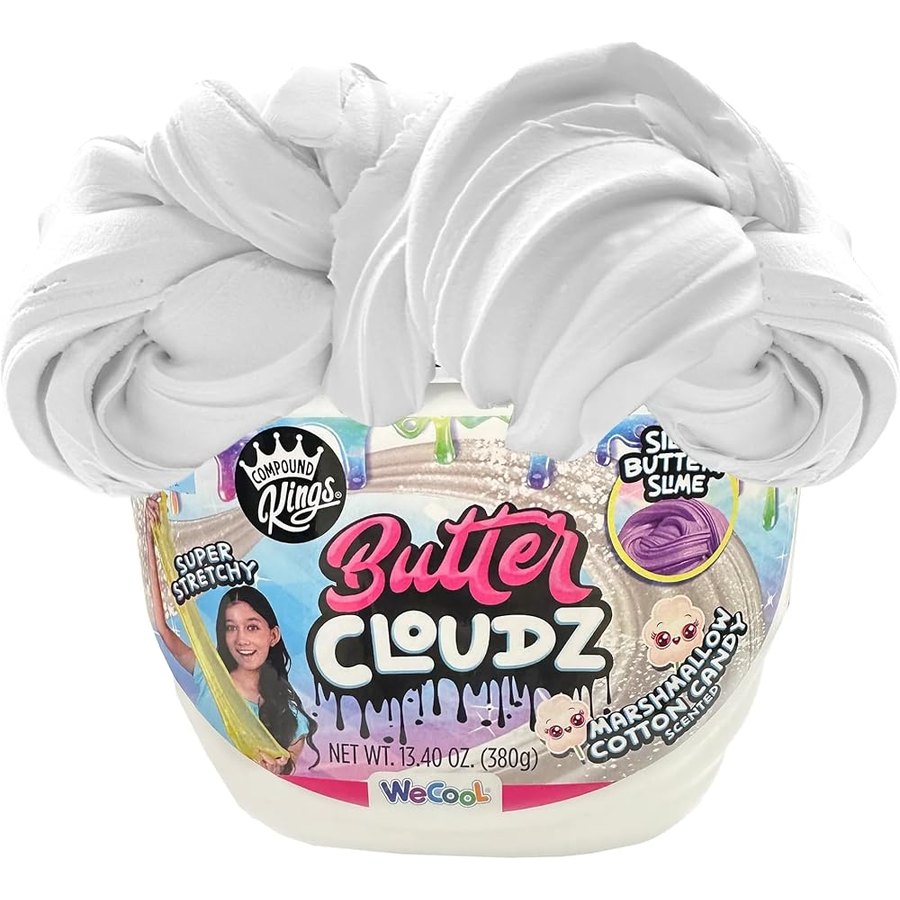 Butter Cloudz Neapolitan Tub
$14.99
- Butter · Neapolitan
- Three-colour tub
-
LARGE
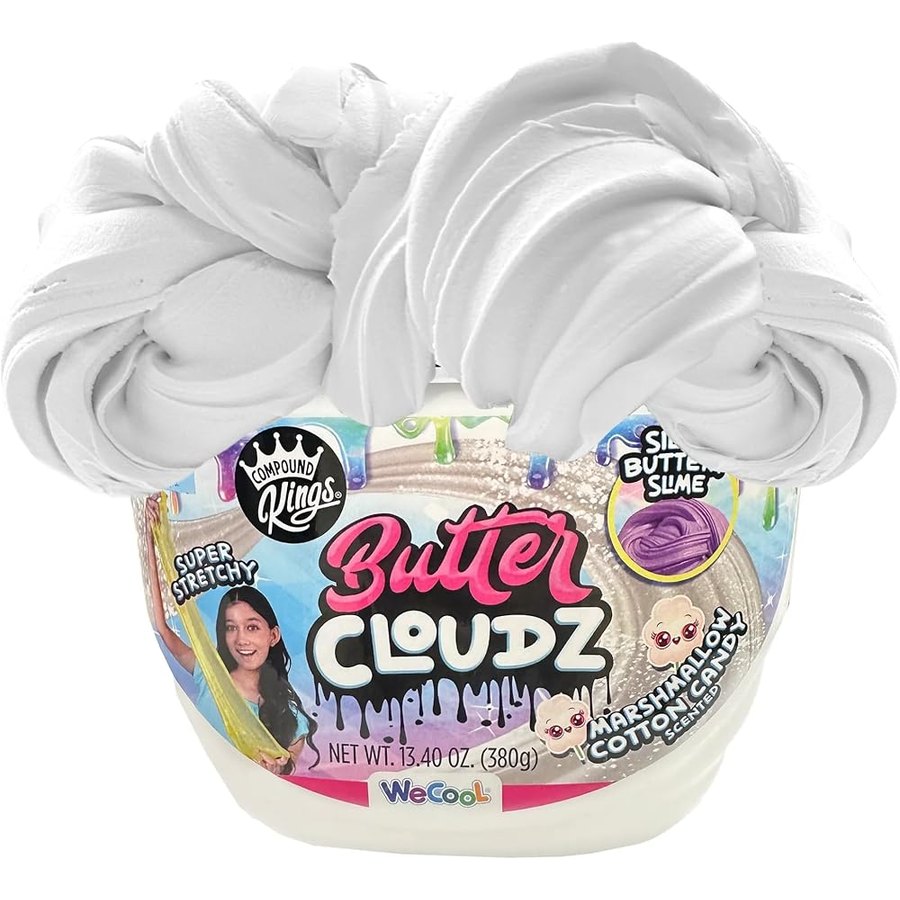 Ice Cream Butter Cloudz Large Tub
$15.99Arrives on a set date
- Cloud butter · Cookie dough
- Large tub
-
2 PACK
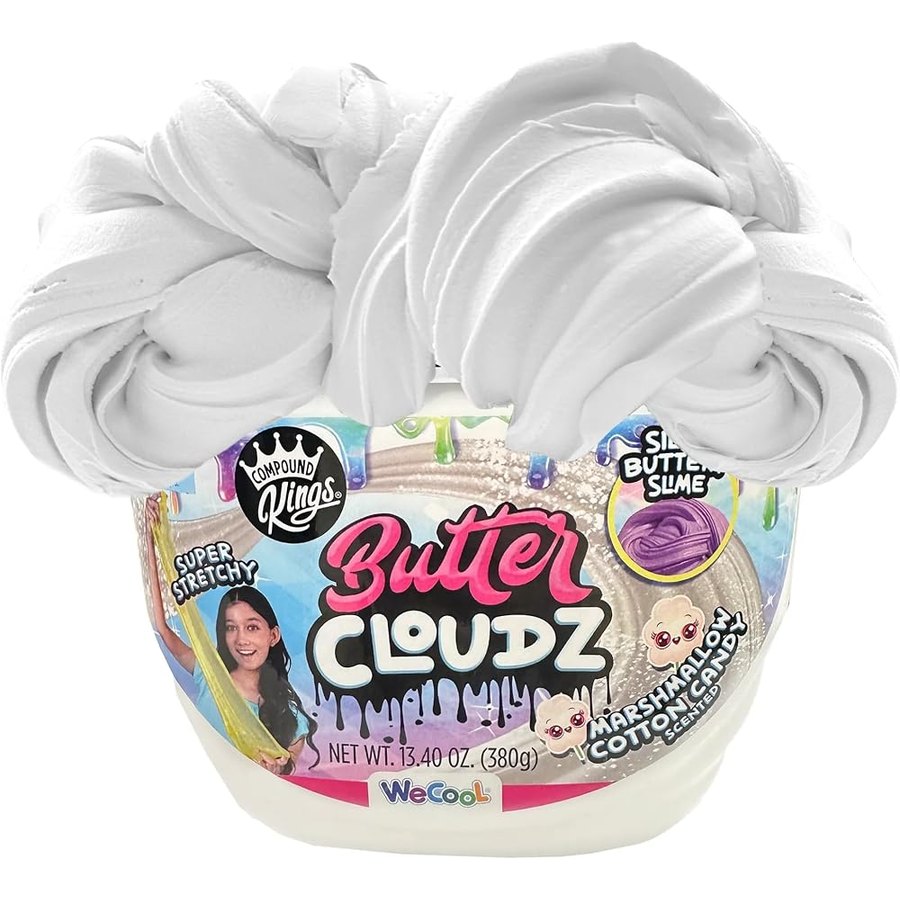
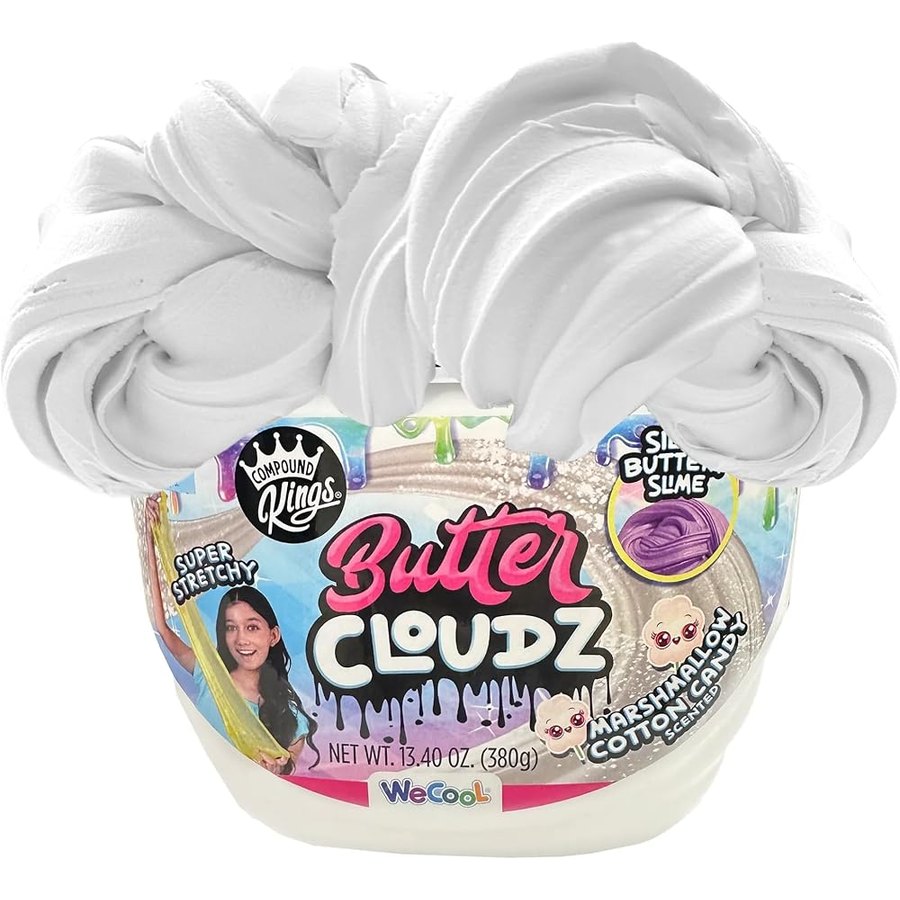 Butter Cloudz Slime Tub 2 Pack
$21.99
- Butter · Two scents
- 2 tubs
-
SWIRL
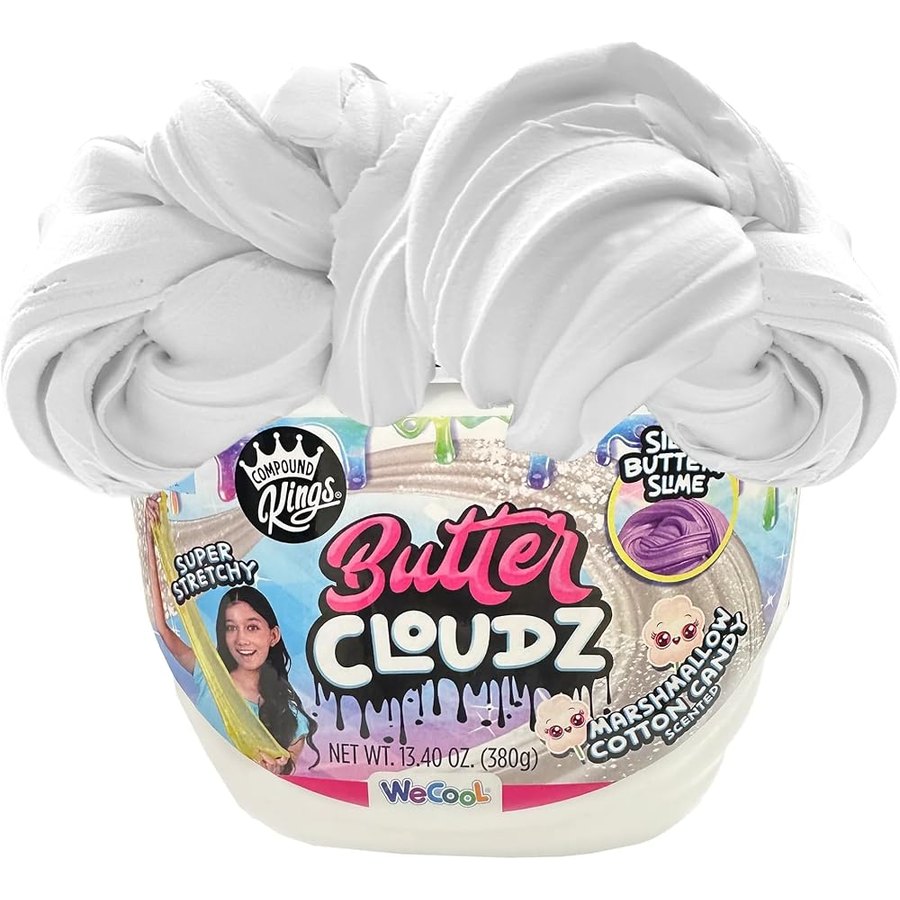 Butter Cloudz Swirls 2 Pack
$14.99
- Swirled butter · Two scents
- 2 tubs
-
48 PACK
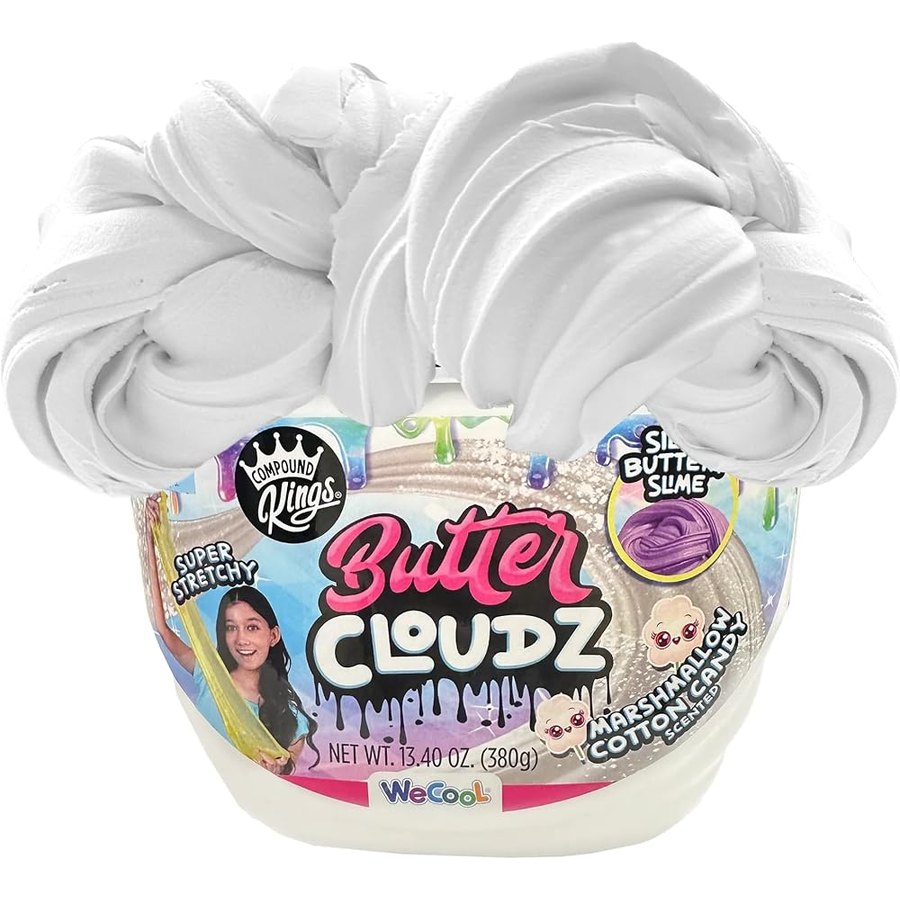 Butter Cloudz 48 Pack
$29.99
- Butter · Assorted
- 48 mini tubs
-
24 PACK
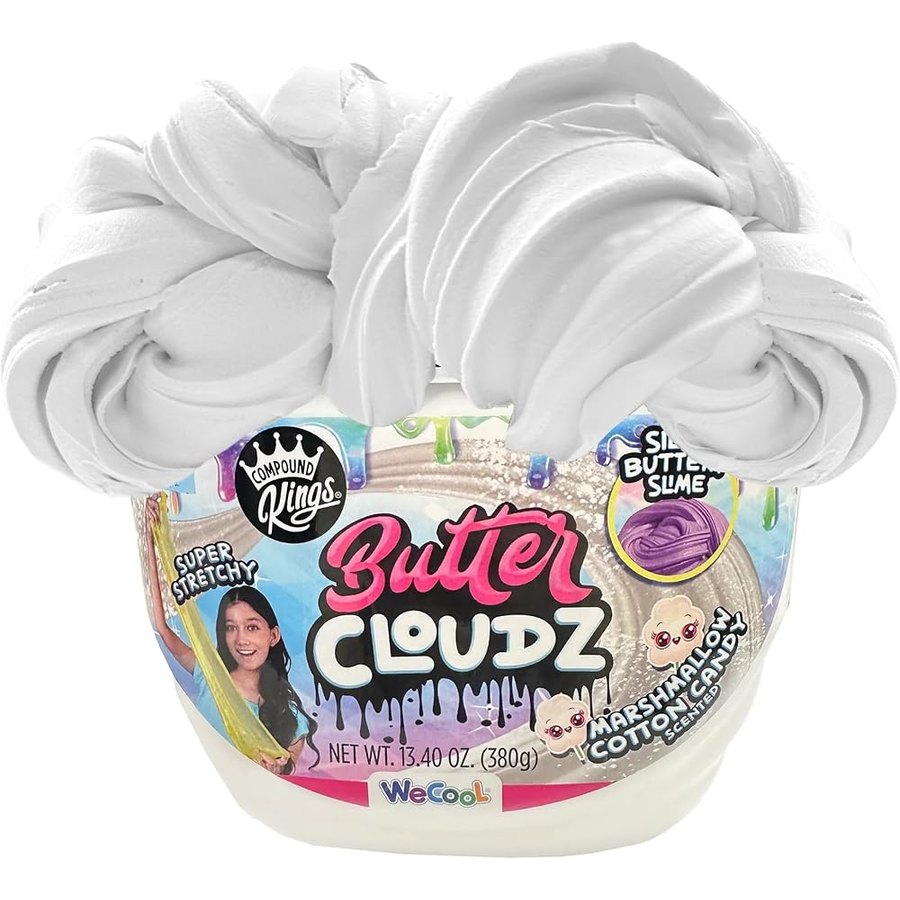 Butter Cloudz 24 Pack
$19.99Arrives on a set date
- Butter · Assorted
- 24 mini tubs
-
REFILL
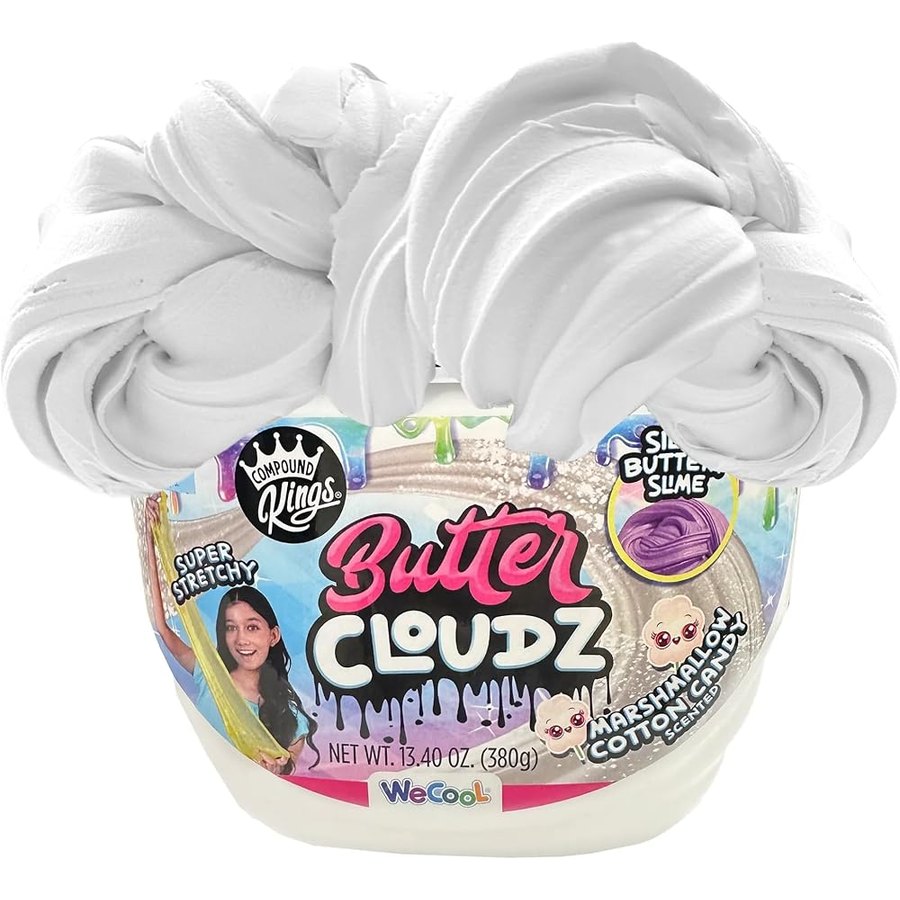 3D Sticker Refills: Undersea Adventure
$14.99
- Sticker sheets · Unscented
- Refill pack
-
GLOW
 Slime Buddy Glow In The Dark
$14.99
- Squish toy · Unscented
- Single buddy